Saturday, September 24, 2005
I'm on my way -- I don't know where I'm going -- but I'm on my way
I’ve been home for about a month now, and have been trying to figure out how to put the finishing touches on the blog. I’ve been racking my brain trying to come up with a clever ending to my trip, until I realized it’s impossible because the journey itself hasn’t ended. Looking back, while the voyage had a definitive beginning in Halifax, and a forced ending in Florida, the trip was an eye opening introduction to new cultures and experiences, providing a view of the opportunities and wonders that exist in other parts of the world. Though my summer at sea has come to an end, the impact, stories, photos, impressions and desire to understand more of the world will be with me forever.
So, I will stop here, by thanking all of you who have taken the time to read my attempt to put my travels into words, with a special appreciation of those who commented and kept in touch while I was thousands of nautical miles away, and in finally disclosing my hope that I will be fortunate enough to continue seeing the world and sharing my thoughts and photos with all of you. Happy Trails --
So, I will stop here, by thanking all of you who have taken the time to read my attempt to put my travels into words, with a special appreciation of those who commented and kept in touch while I was thousands of nautical miles away, and in finally disclosing my hope that I will be fortunate enough to continue seeing the world and sharing my thoughts and photos with all of you. Happy Trails --


Friday, August 19, 2005
How long will it take your browser to load this entry?
There’s still lots to say, but just not enough time to write it all, in addition to finishing things up on the ship, packing up, and saying goodbye to people. However, I promise one final entry wrapping everything up to be posted in the next couple of days. Before I close the journey in words, I’ve got some (ok, a lot of) photos to share with you that I haven’t yet posted. Let’s hope your internet connection is faster than the one on the ship so that you can see all of them! PS. I don't have enough internet minutes left to check if everything uploaded correctly, and blogger's image upload is acting up...so we'll see how this all comes out.
Iceland:
A church in the middle of nowhere:

Thingvellir National Park:


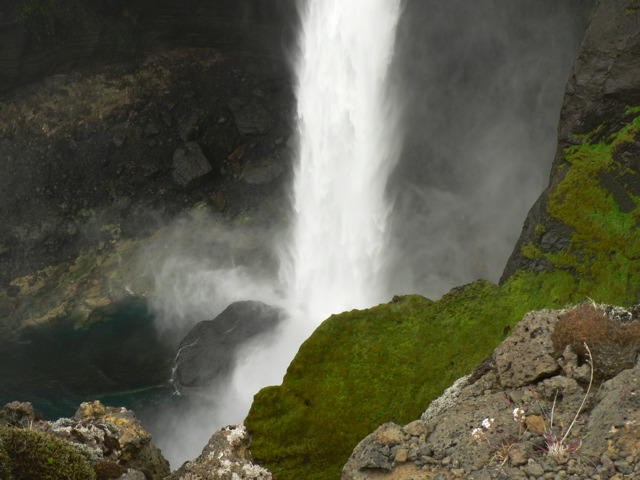
The biggest waterfall I’ve ever seen:

Norway:
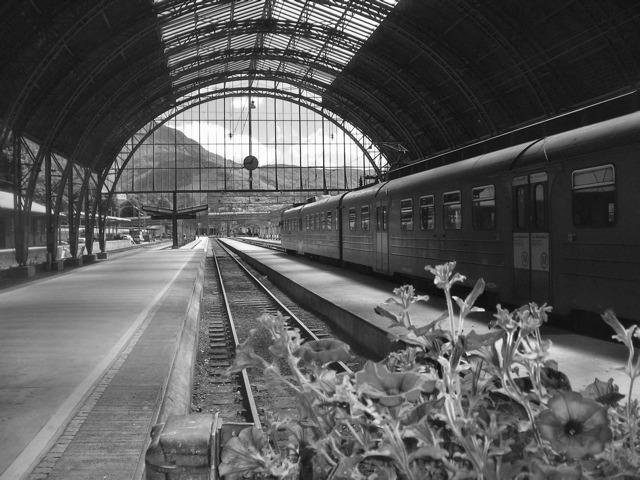
The train to Voss:

Little boxes, on the hillside:
View of Bergen from Mt. Floien:
Russia:
Inside the Kremlin: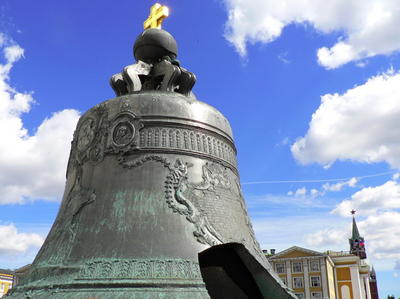
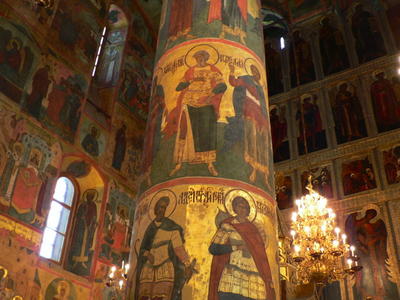
Inside a church inside the Kremlin:
Poland:
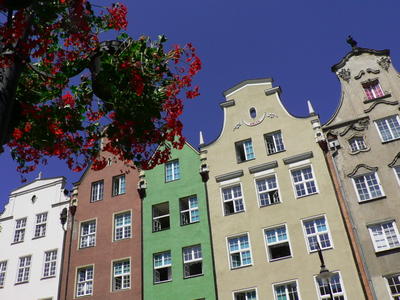
Rebuilt buildings in Gdansk:

Belgium:
A square in Brussels:

A castle in Ghent:

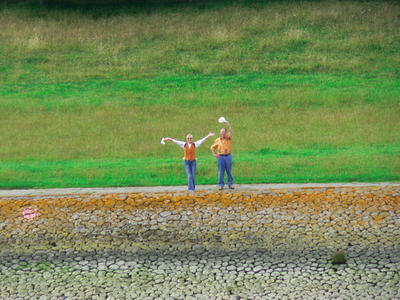
We passed through the Kiel Canal on the way to Belgium from Poland. It’s a waterway in Northern Germany usually only used by smaller ships, rarely large passenger ships. Lots of people living along the canal were so excited to see us, including this couple waving as we went by:
France:
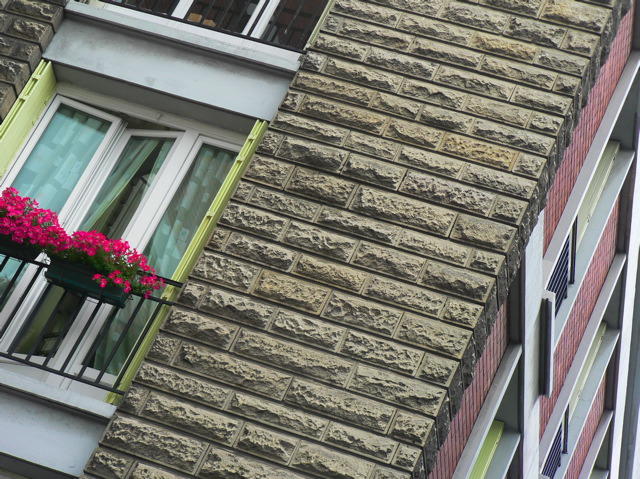
A home in Le Havre:

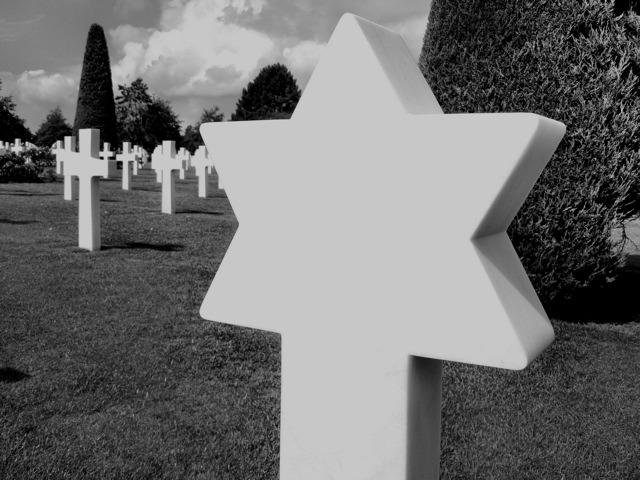
A Magen David amongst crosses in Normandy:

Ireland:
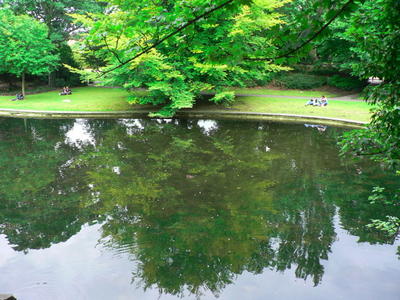
One of my favorite parts of Ireland, St. Stephen’s Green, a park built right into the middle of the city:
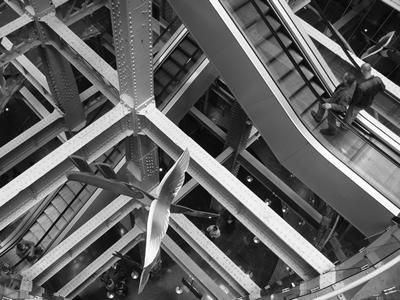
Inside the Guinness Factory:
Spain:
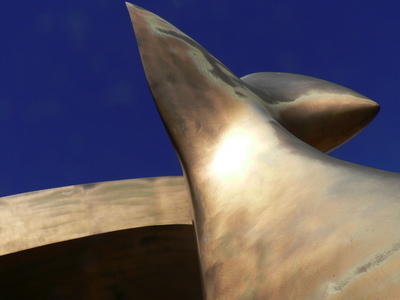
A sculpture in Guernica:
A fountain in Bilbao, in front of a Metro entrance:
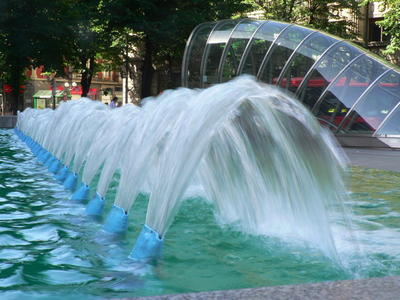
The hills of Bilbao through a fountain in the city center:

Homeward Bound:
Sunsets, sunsets:


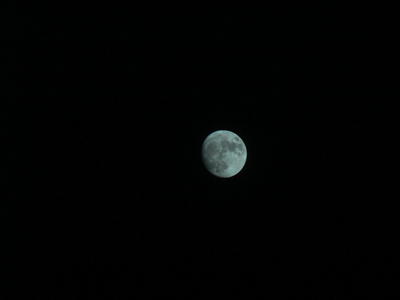
The skies are so clear along the Atlantic, and last night we had a full moon:
Iceland:
A church in the middle of nowhere:

Thingvellir National Park:


The biggest waterfall I’ve ever seen:
Norway:
The train to Voss:
Little boxes, on the hillside:

View of Bergen from Mt. Floien:

Russia:
Inside the Kremlin:

Inside a church inside the Kremlin:

Poland:
Rebuilt buildings in Gdansk:


Belgium:
A square in Brussels:
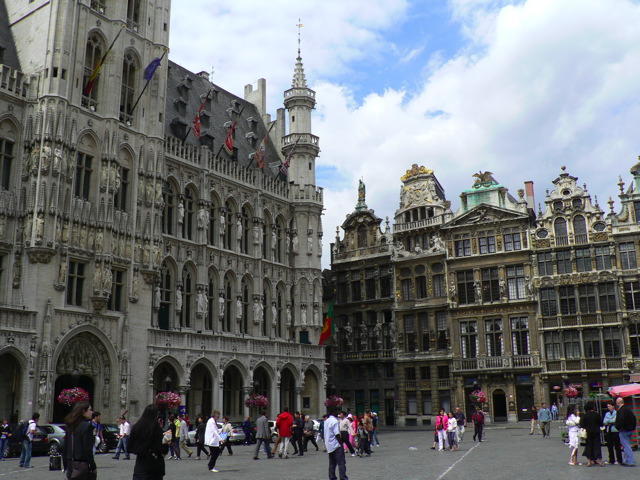
A castle in Ghent:

We passed through the Kiel Canal on the way to Belgium from Poland. It’s a waterway in Northern Germany usually only used by smaller ships, rarely large passenger ships. Lots of people living along the canal were so excited to see us, including this couple waving as we went by:

France:
A home in Le Havre:
A Magen David amongst crosses in Normandy:
Ireland:
One of my favorite parts of Ireland, St. Stephen’s Green, a park built right into the middle of the city:

Inside the Guinness Factory:

Spain:
A sculpture in Guernica:
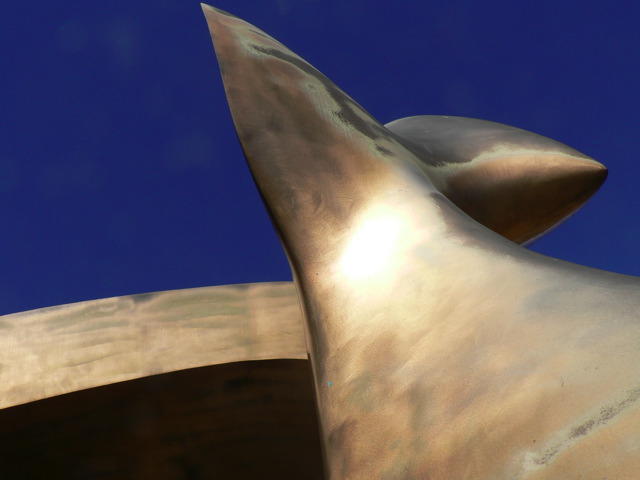
A fountain in Bilbao, in front of a Metro entrance:

The hills of Bilbao through a fountain in the city center:

Homeward Bound:
Sunsets, sunsets:

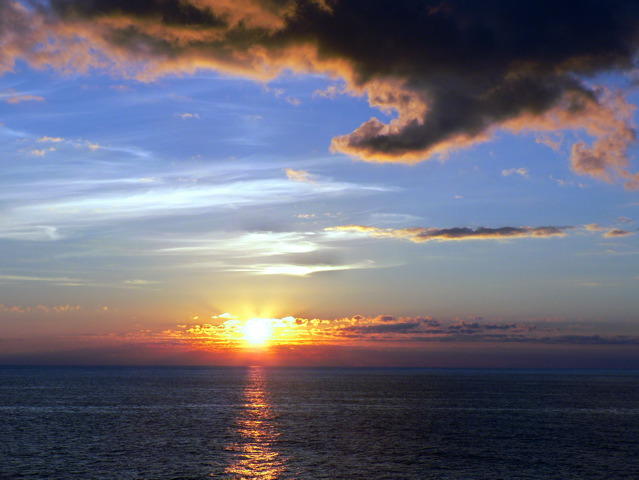
The skies are so clear along the Atlantic, and last night we had a full moon:

Tuesday, August 16, 2005
Floatin in the Atlantic
I’m still here, it’s just been hard to find time to write – even on a 10 day voyage back to the US. My time has been split between end of term papers and finals and lots of time lying out on the pool deck enjoying the amazing weather on the seas. I still promise at least one more entry, so this won’t be the final one – trust me, I’ve still got more to say.
A bunch of people have asked me for rankings of the countries that I’ve visited, and though it’s of course tough to rank countries on limited observation, here are a few “top 8’s” for you all.
Food:
1. Belgium – Fries, chocolate, waffles, beer…QED
2. France – knocked down from #1 in a shocker. Last time I was in France I ate really well (and paid for it). This time I tried to go a bit cheaper, so it was lots of bread, cheese, and Orangina.
3. Poland – Surprise! The food is rich, but it’s cheap and really filling. I took a 9-hour walking tour of Krakow, and pretty much survived off of a big plate of potato and cheese Pierogi -- one of the best meals of the trip.
4. Norway – pretty much just for the soft serve ice cream dipped in Nesquik.
5. Spain – The Spanish omelet was delicious, but it fell a bit in the ranking as it was served with a baguette, not a New York style onion bagel lightly toasted.
6. Russia – Not as bad as one would expect, but since the pasteurizing process isn’t quite there yet, they boil all of the milk; unfortunately, they don’t cool it down, so my cereal and milk turned to corn-flake-oatmeal pretty quickly.
7. Ireland – there’s a reason you only hear about Beer from this country.
8. Iceland – though I didn’t eat any of them, their gastronomic specialties include boiled sheep’s head, cow testicle and shark fin that is filled with mercury so it has to be buried under sand for months before it can be eaten; it’s said to have the odor of a fine cheese. I ate Italian.
Girls:
1. NOR-freakin-WAY. Ajhfdakljerjklcaljkd!
2-8. Countries that aren’t Norway.
Architecture:
1. Belgium – homes characteristic of Hanseatic league cities; think Amsterdam, but spotlessly clean.
2. France – spending time in small Le Havre and enormous Paris gave a sense of the contrast of two distinct parts of France, but both were striking – Paris for its grandeur and Le Havre for its quaint flavor.
3. Russia – granted, I only spent time in the two most magnificent cities in Russia – St. Petersberg and Moscow – but the palaces, the onion domes, and the color were spectacular. I don’t think Siberia is known for its design, though.
4. Norway – similar to Belgium, as it was also a major trading port, but what makes it stand out is its use of public space – parks and fountains – including one large pond in the city center which fills with the reflection of the narrow colorful homes of Bergen.
5. Ireland – while the city itself is a bit bland right now, with all the construction occurring it’s clear that the city is transforming itself as we speak.
6. Iceland – the country is known for its nature – which it does better than any other place in the world I’ve been – but the buildings themselves are simple.
7. Poland – Blame the low ranking on the Germans, who virtually destroyed Gdansk during WWII. It’s been rebuilt, but it’s not quite the same knowing you’re only seeing a replica.
8. Spain – I didn’t make it out to Barcelona or Madrid, but I think if I had, Spain might be higher.
Finally, though there have been so many moments on the trip I’ll remember, I want to share a few highlights with you, many of which I haven’t yet told you about.
• The Icelandic superjeep trip. You all know I love to describe things, but it’s been two months and I still can’t put the trip into words.
• Our ship pulling away from Iceland. We left about 11 PM, which, at that latitude, is time for sundown. The buildings began fading away into the horizon just as the sun was dipping down, resulting in a colorful panoramic of Reykjavik, further complimented by the kite drifting with the whim of the boat induced winds.
• White water rafting in Norway. It was the first sunny day since winter. Light blue skies, navy blue water flowing between tall green pines, as we first time rafters (somehow) navigated the rapids without a single flip, before floating alongside the raft downstream to our destination.
• Hiking Mt. Floien in Norway. An incredible contrast as our hike began at the ship, traversing through the urban areas, before making our way up the biggest mountain in Bergen suddenly removing us from the hustle of the city. From the top was a 360-degree view of the city, a great photo-op, and a chance for the urban-geographer in me to observe the city from above.
• Field trip with my IR class to the St. Petersburg School of International Relations where we heard from Russian professors on, among other things, the state of Russia today. While the event can’t compare to the superjeep or the rafting in terms of excitement, it presented a number of interesting dimensions of Russia for me to consider. I’m still trying to make sense of what I think of Russia today, in terms or its politics, economics, and society, but I take some comfort in what Winston Churchill famously said: Russia is a mystery inside of a riddle wrapped in an enigma. I’m still wrestling with my thoughts on the country, but if I can figure them out, I’ll be sure to let you know.
Sorry, I’m going to have to cut it short here, because I want to make sure I post something today, but need to spend some time working on an essay. Stay tuned for more.
A bunch of people have asked me for rankings of the countries that I’ve visited, and though it’s of course tough to rank countries on limited observation, here are a few “top 8’s” for you all.
Food:
1. Belgium – Fries, chocolate, waffles, beer…QED
2. France – knocked down from #1 in a shocker. Last time I was in France I ate really well (and paid for it). This time I tried to go a bit cheaper, so it was lots of bread, cheese, and Orangina.
3. Poland – Surprise! The food is rich, but it’s cheap and really filling. I took a 9-hour walking tour of Krakow, and pretty much survived off of a big plate of potato and cheese Pierogi -- one of the best meals of the trip.
4. Norway – pretty much just for the soft serve ice cream dipped in Nesquik.
5. Spain – The Spanish omelet was delicious, but it fell a bit in the ranking as it was served with a baguette, not a New York style onion bagel lightly toasted.
6. Russia – Not as bad as one would expect, but since the pasteurizing process isn’t quite there yet, they boil all of the milk; unfortunately, they don’t cool it down, so my cereal and milk turned to corn-flake-oatmeal pretty quickly.
7. Ireland – there’s a reason you only hear about Beer from this country.
8. Iceland – though I didn’t eat any of them, their gastronomic specialties include boiled sheep’s head, cow testicle and shark fin that is filled with mercury so it has to be buried under sand for months before it can be eaten; it’s said to have the odor of a fine cheese. I ate Italian.
Girls:
1. NOR-freakin-WAY. Ajhfdakljerjklcaljkd!
2-8. Countries that aren’t Norway.
Architecture:
1. Belgium – homes characteristic of Hanseatic league cities; think Amsterdam, but spotlessly clean.
2. France – spending time in small Le Havre and enormous Paris gave a sense of the contrast of two distinct parts of France, but both were striking – Paris for its grandeur and Le Havre for its quaint flavor.
3. Russia – granted, I only spent time in the two most magnificent cities in Russia – St. Petersberg and Moscow – but the palaces, the onion domes, and the color were spectacular. I don’t think Siberia is known for its design, though.
4. Norway – similar to Belgium, as it was also a major trading port, but what makes it stand out is its use of public space – parks and fountains – including one large pond in the city center which fills with the reflection of the narrow colorful homes of Bergen.
5. Ireland – while the city itself is a bit bland right now, with all the construction occurring it’s clear that the city is transforming itself as we speak.
6. Iceland – the country is known for its nature – which it does better than any other place in the world I’ve been – but the buildings themselves are simple.
7. Poland – Blame the low ranking on the Germans, who virtually destroyed Gdansk during WWII. It’s been rebuilt, but it’s not quite the same knowing you’re only seeing a replica.
8. Spain – I didn’t make it out to Barcelona or Madrid, but I think if I had, Spain might be higher.
Finally, though there have been so many moments on the trip I’ll remember, I want to share a few highlights with you, many of which I haven’t yet told you about.
• The Icelandic superjeep trip. You all know I love to describe things, but it’s been two months and I still can’t put the trip into words.
• Our ship pulling away from Iceland. We left about 11 PM, which, at that latitude, is time for sundown. The buildings began fading away into the horizon just as the sun was dipping down, resulting in a colorful panoramic of Reykjavik, further complimented by the kite drifting with the whim of the boat induced winds.
• White water rafting in Norway. It was the first sunny day since winter. Light blue skies, navy blue water flowing between tall green pines, as we first time rafters (somehow) navigated the rapids without a single flip, before floating alongside the raft downstream to our destination.
• Hiking Mt. Floien in Norway. An incredible contrast as our hike began at the ship, traversing through the urban areas, before making our way up the biggest mountain in Bergen suddenly removing us from the hustle of the city. From the top was a 360-degree view of the city, a great photo-op, and a chance for the urban-geographer in me to observe the city from above.
• Field trip with my IR class to the St. Petersburg School of International Relations where we heard from Russian professors on, among other things, the state of Russia today. While the event can’t compare to the superjeep or the rafting in terms of excitement, it presented a number of interesting dimensions of Russia for me to consider. I’m still trying to make sense of what I think of Russia today, in terms or its politics, economics, and society, but I take some comfort in what Winston Churchill famously said: Russia is a mystery inside of a riddle wrapped in an enigma. I’m still wrestling with my thoughts on the country, but if I can figure them out, I’ll be sure to let you know.
Sorry, I’m going to have to cut it short here, because I want to make sure I post something today, but need to spend some time working on an essay. Stay tuned for more.
Thursday, August 11, 2005
Goodbye, Land.

I’m writing this entry just as we’re getting ready to pull away from Bilbao and head out to the Atlantic for an 11-day journey back to Florida. It’s hard to put into words quite yet how it feels, but it’s an incredibly exciting sense, knowing that we’re headed back to the States, but at the same time coming back after seeing eight different countries, cultures, and going through countless experiences. Keep checking back, as between now and the 21st, I’ll be posting some more stories from Spain, a couple of blogs that I wrote but somehow got lost in the quick shuffle between countries, and some Springeresque “Final Thoughts.” Until then, an overview of Bilbao:
Bilbao struck me as a city that is style over substance. The famous Guggenheim Museum, Bilbao, serves as a symbol for this dichotomy. The building itself, designed by the architectural wonder Frank Gehry, is without a doubt a site to behold. Nestled along the river that divides old-town from the new, it is an enormous sandstone building topped off with swirling metal panels that reach high into the Spanish sky. On a sunny day – and what else is there, here? – the light bounces off of the silver, creating at once a shimmer and a sheen that says this isn’t just a regular building – it’s a building that Bilbao has centered its restructured economy around.
The inside of the building, however, is a different story. It’s a typical Guggenheim – not afraid to take chances. The modern art contained within the spectacular building struck me as doing a disservice to Gehry’s brilliance. Let me highlight a couple of examples that will show what I mean. One piece of “art” in the museum is a cardboard box (flattened), attached to a blank white wall. On the box, are a couple smaller pieces of cardboard stapled to it. Not surprisingly, the piece of art is entitled “cardboard box.” The medium used is listed as “cardboard box, with cardboard fragments.” Now, believe, me, I’m the first to admit that I don’t appreciate much art, especially not modern art, so perhaps it’s me not understanding the art. On the other hand…it’s a cardboard box.
The second piece of “art” that I want to highlight is not so much a piece of art, but rather a gigantic hallway of the museum filled with larger than life panels arranged in waves and spirals, through which the art aficionados are supposed to walk. We’re reminded it’s not just “art,” it’s a “personal artistic experience.” I walked through it. I wandered in and out of spirals, and the only art I found therein was the grace and style needed to walk in and out of the panels when there are two directions of people walking and only room enough for one and a half at a time. The famed NY Times art critic, Michael Kimmelman, who is notoriously tough, called this piece a “deeply humane work.” While I certainly didn’t find it inhumane, it’s just a glorified corn-field maze, that is supposed to summon forth my inner Picaso. If you’re wondering, Pablo is still lost inside of me.
A second example of style over substance is the city’s recently built Metro system. It is, hands down, the nicest underground I’ve ever been on, and I’ve ridden quite a few. The entrances are sleek sloped glass cones with escalators leading down to sub-Bilbao. The trains are ultra modern, and the stations are clean and futuristic looking. The ride itself, though, is slow, the wait between trains is too long, and the stops aren’t far-reaching enough. It’s beautiful, but not an especially effective means of transportation – the antithesis of the DC metro, which is a bit ugly and grimy, but man does it get the job done. The metro, along with the museum, highlights the gap in Bilbao between essence and essentials.
Part of my negative view of the city comes because we visited at the wrong time – in two senses of the word. The first, is that Bilbao is a rebuilding economy, like Pittsburg devastated from the loss of the steel industry. It has some brand new infrastructure (hello metro), and some cultural highlights (Guggenheim, what), but is lacking the guts that make a city special. I think that despite the above comments, Bilbao will restructure itself to be a strong city again, but we happened to visit at a time when it is not at its strongest. Secondly, we visited in August, when nearly all Spaniards are on “holiday” elsewhere in Spain and Europe. Therefore, the city felt emptier than I’m sure it is at other times during the year. I think that it would be interesting to head back to Bilbao in maybe 10 years, during the spring or fall, and see how that Bilbao compares to the one I just saw.
---------------
The inside of the metro:

A dog, made of flowers, in front of the Guggenheim:

The Guggenheim showing through the streets of Bilbao:
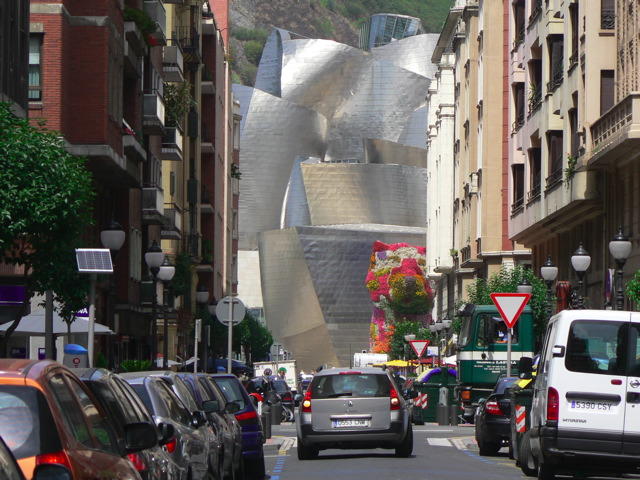
A picture I took of the Spirals, which, by the way, is forbidden; you are reminded constantly not to take pictures inside the humane exhibit. (If you are from Guggenheim security and you are reading this, “oops, sorry, I forgot.”)

Monday, August 08, 2005
Dublin, Continued
This should highlight the craziness that is SAS: this entry about Dublin, Ireland, was written aboard a moving ship in the Bay of Biscay, and is now being posted in a small internet café in Bilbao, Spain. Also, the blogger page automatically loads in Spanish here, so we´ll see if I managed to figure it all out to post.
---------------
Our ship was docked about 15 minutes away from the city center, in the middle of a huge cargo-terminal. We had a shuttle that would run from the ship to the city during the day, but it stopped running at night, which meant that we had to spend our hard earned Euros on cabs at night. While they were certainly expensive, the cab drivers in Dublin are unquestionably the best in Europe. They love to talk (and talk, and talk…) and virtually all rides begin with “so, should I point out some sights along the way?” In reality, it’s an inconsequential question anyway, because it seems that the tour-guiding service is included in cab fare. The best cabbie I had was when I left the Guinness factory on the second day, taking a short trip to the shuttle stop. Along the way I had asked for some of his recommendations on places to go for food and other sites to see. Not only did he have a recommendation for all of them, when we came to the destination he pulled out a map, and started scribbling on it. When he was done, he had personalized a map for me with all of the places he had talked about (plus more), and had given an “Irish-English to English” pronunciation guide for me for a couple of the confusing names. He turned around to hand it to me, and as I stuck out my hand he said, “Wait a minute.” He turned back around, grabbed a couple of highlighters and created an ad hoc path for me to follow to make sure I fit in his Dublin highlights. He got a nice tip.
------------
One of my favorite bands is an Irish group called The Saw Doctors (thank you, Blake). I managed to see them once in concert in the US, and became a big fan, though it was hard (actually, impossible) to find any Saw Doctors albums in the US, even at major record stores like Amoeba. Therefore, one of my main goals when I got to Dublin was to find me some Saw Doctors albums. I’m happy to report I managed to pick up a couple of discs, and I impressed cabbies not once, but twice, when I mentioned I liked the group. I haven’t had the chance to surf the Internet to find out yet, but one of the cabbies told me that one of the band members won the lottery. If you find this interesting (i.e. if you are Blake), check it out and tell me if it’s true.
I have to say, though, that despite a lot of clamoring in the US about the death of mom and pop record shops, Ireland taught me how nice it is to be able to walk into a Tower in the US and find exactly what you want. There aren’t really any big record stores in Dublin, all are small, with inventory for the whole store that would fit inside of the spoken word section at your local Virgin Record store. That meant that even though the Saw Doctors are pretty popular in Ireland, they had to compete for quite limited shelf space with other Irish and American bands, not to mention the “grand” Euro-pop-techno-dance-mix-rave-trance albums. Also, going to Ireland has helped me appreciate some of things the Saw Doctors sing about a bit better, as I now understand that their song N17 isn’t about marijuana use, but rather about a highway leading to their hometown in Western Ireland, and I can now picture places they’re talking about in their song “Galway and Mayo.”
------------
The Irish, in my mind, are the wittiest people I’ve ever met. Of course there’s satirist Oscar Wilde, but even the “regular folk” have a great sense of humor. The tour guide on my city-orientation tour was a little old lady, but boy did she have a mouth on her! Also, they have perhaps the best-named store ever: “Knobs and Knockers.” What do they sell there? Door accessories, of course: knobs, handles, decorations, etc.
--------------
I took a tour of the Guinness factory, but have to say it’s incredibly overrated. In fact, it’s not a factory tour, but rather a 15-minute walk through the process of making beer. Then you have 5 stories to go up, each floor with a few interesting displays, until you reach the seventh story “gravity bar,” which has a panoramic view of Dublin, and a free pint of the “Black magic.” The only part of the tour worthwhile was a section where visitors could fill out postcards and post them to a large kiosk. Most of the cards would be a combination of mentioning their love for Guinness and a “shout out” to their home-town or country. It was really quite cool to see countries as far away as South Africa and Brazil represented on the board.
-------------
Looks like uploading photos isn´t working...sorry, I´ll post them later
---------------
Our ship was docked about 15 minutes away from the city center, in the middle of a huge cargo-terminal. We had a shuttle that would run from the ship to the city during the day, but it stopped running at night, which meant that we had to spend our hard earned Euros on cabs at night. While they were certainly expensive, the cab drivers in Dublin are unquestionably the best in Europe. They love to talk (and talk, and talk…) and virtually all rides begin with “so, should I point out some sights along the way?” In reality, it’s an inconsequential question anyway, because it seems that the tour-guiding service is included in cab fare. The best cabbie I had was when I left the Guinness factory on the second day, taking a short trip to the shuttle stop. Along the way I had asked for some of his recommendations on places to go for food and other sites to see. Not only did he have a recommendation for all of them, when we came to the destination he pulled out a map, and started scribbling on it. When he was done, he had personalized a map for me with all of the places he had talked about (plus more), and had given an “Irish-English to English” pronunciation guide for me for a couple of the confusing names. He turned around to hand it to me, and as I stuck out my hand he said, “Wait a minute.” He turned back around, grabbed a couple of highlighters and created an ad hoc path for me to follow to make sure I fit in his Dublin highlights. He got a nice tip.
------------
One of my favorite bands is an Irish group called The Saw Doctors (thank you, Blake). I managed to see them once in concert in the US, and became a big fan, though it was hard (actually, impossible) to find any Saw Doctors albums in the US, even at major record stores like Amoeba. Therefore, one of my main goals when I got to Dublin was to find me some Saw Doctors albums. I’m happy to report I managed to pick up a couple of discs, and I impressed cabbies not once, but twice, when I mentioned I liked the group. I haven’t had the chance to surf the Internet to find out yet, but one of the cabbies told me that one of the band members won the lottery. If you find this interesting (i.e. if you are Blake), check it out and tell me if it’s true.
I have to say, though, that despite a lot of clamoring in the US about the death of mom and pop record shops, Ireland taught me how nice it is to be able to walk into a Tower in the US and find exactly what you want. There aren’t really any big record stores in Dublin, all are small, with inventory for the whole store that would fit inside of the spoken word section at your local Virgin Record store. That meant that even though the Saw Doctors are pretty popular in Ireland, they had to compete for quite limited shelf space with other Irish and American bands, not to mention the “grand” Euro-pop-techno-dance-mix-rave-trance albums. Also, going to Ireland has helped me appreciate some of things the Saw Doctors sing about a bit better, as I now understand that their song N17 isn’t about marijuana use, but rather about a highway leading to their hometown in Western Ireland, and I can now picture places they’re talking about in their song “Galway and Mayo.”
------------
The Irish, in my mind, are the wittiest people I’ve ever met. Of course there’s satirist Oscar Wilde, but even the “regular folk” have a great sense of humor. The tour guide on my city-orientation tour was a little old lady, but boy did she have a mouth on her! Also, they have perhaps the best-named store ever: “Knobs and Knockers.” What do they sell there? Door accessories, of course: knobs, handles, decorations, etc.
--------------
I took a tour of the Guinness factory, but have to say it’s incredibly overrated. In fact, it’s not a factory tour, but rather a 15-minute walk through the process of making beer. Then you have 5 stories to go up, each floor with a few interesting displays, until you reach the seventh story “gravity bar,” which has a panoramic view of Dublin, and a free pint of the “Black magic.” The only part of the tour worthwhile was a section where visitors could fill out postcards and post them to a large kiosk. Most of the cards would be a combination of mentioning their love for Guinness and a “shout out” to their home-town or country. It was really quite cool to see countries as far away as South Africa and Brazil represented on the board.
-------------
Looks like uploading photos isn´t working...sorry, I´ll post them later
Thursday, August 04, 2005
DubDubDublin
It’s been a while since I’ve posted to the blog, so I figured I should at least get a couple of thoughts (and photos) on Dublin up. This is just the intro; stay tuned for the rest of my Ireland experience.
------------------
For those of you that are tired of reading me write endlessly about food in the last couple of ports, rest assured I won’t discuss food in Ireland, for, in truth, it would be a woeful, depressing tale.
Now, to the topic of the blog. On Monday night we decided to do a musical pub crawl through Dublin’s “Temple Bar” area. A pub crawl, for those of you not in the know, can be thought of as a sight-seeing tour where the only sights are pubs and glasses, and the seeing gets harder as the night goes on. The musical aspect that made this tour unique was that we had a guitar player and a fiddler travel with us to each pub, playing traditional Irish music in each venue, while explaining to us some foundations of Irish rhythms and melodies.
What is especially interesting about Dublin’s pub culture is how diverse and all-inclusive it is. Previous pub crawls I have been on in other countries were filled with 19-25 year olds only; in Dublin, the crawl, and the pubs themselves, are filled with people everywhere from 18-60(+), Much to my surprise, one of my fellow ‘crawlers was not only the Dean of Semester at Sea, but also my International Relations professor. At the beginning of our voyage, our Executive Dean told us “nothing about Semester at Sea is normal.” This pub-crawl could be the quintessential SAS is not normal moment. Granted, I really like my Professor, and we said hello, and then talked a bit later on in the night, but regardless I don’t think I’ll ever find one of my Geography professors not only sitting with me in Maloney’s, but then following me across the street to BrewCo. Certainly one of those unique Semester at Sea moments that I won’t forget.
----------------
The US Ambassador to Ireland came on board the ship for a tour and to address the faculty and senior passengers right before we set sail. A few lucky students, including myself, were invited to attend the briefing as well. The event was held in the faculty/staff lounge, which is normally off limits to students, therefore, for us, it was like breaking through to a magical wonderland where drinks are free, and the finger sized snack food flows to no end. After an hour or so of milling about in the SAS-VIP room, the Ambassador showed up and spoke briefly to the group. He gave a rundown of US-Ireland relations, and talked about some recent Irish political developments and then, yielded the floor for questions -- A couple of softball queries, and then some good ones from my favorite card carrying Democrat faculty members. One asked the Ambassador about the Bolton nomination to the UN, to which the Ambassador gave a skillfully diplomatic answer until he mentioned that the UN is a flawed organization and Americans aren’t happy about spending $2 Billion without anything to show for it. Something tells me it’s not the UN part of the equation we’re unhappy with; maybe, I dunno, it’s the us ignoring them part, Mr. Ambassador.
-----------------
Until the next Dublin installment, I leave you with a few photos of the city and the pub crawl:
The gate leading out of St. Stephen’s Green – a fantastic park with a duck pond and foliage located right in the heart of the city:

The famous Ha’penny bridged, thus named because back in the day it cost half a penny to cross. Good thing they don’t charge to cross the bridge nowadays, with the Euro exchange rate and all, it would cost Ha’penny times 1.2:

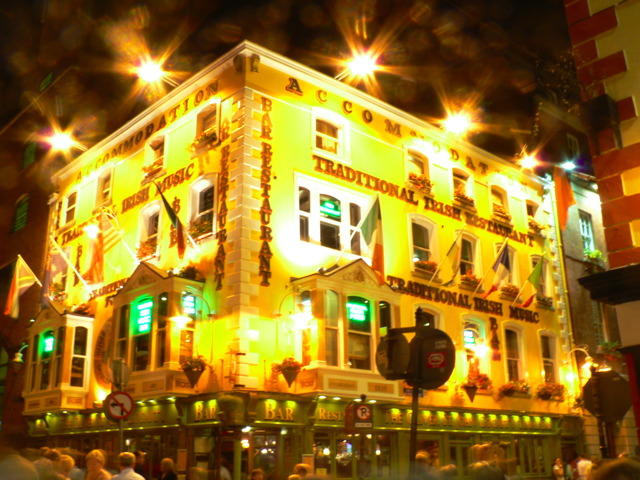
One of the last stops on the pub crawl:

What a grand idea! Your date thinks you’re just going to empty out the 2 pints you just drank, but really, thanks to that euro coin in your pocket, you’re going to emerge from the restroom smelling better than you ever have before. Brilliant:

Yeah, pretty much I’m just posting this picture because it’s me with three girls. (No, I’m not wearing vend-a-scent):

------------------
For those of you that are tired of reading me write endlessly about food in the last couple of ports, rest assured I won’t discuss food in Ireland, for, in truth, it would be a woeful, depressing tale.
Now, to the topic of the blog. On Monday night we decided to do a musical pub crawl through Dublin’s “Temple Bar” area. A pub crawl, for those of you not in the know, can be thought of as a sight-seeing tour where the only sights are pubs and glasses, and the seeing gets harder as the night goes on. The musical aspect that made this tour unique was that we had a guitar player and a fiddler travel with us to each pub, playing traditional Irish music in each venue, while explaining to us some foundations of Irish rhythms and melodies.
What is especially interesting about Dublin’s pub culture is how diverse and all-inclusive it is. Previous pub crawls I have been on in other countries were filled with 19-25 year olds only; in Dublin, the crawl, and the pubs themselves, are filled with people everywhere from 18-60(+), Much to my surprise, one of my fellow ‘crawlers was not only the Dean of Semester at Sea, but also my International Relations professor. At the beginning of our voyage, our Executive Dean told us “nothing about Semester at Sea is normal.” This pub-crawl could be the quintessential SAS is not normal moment. Granted, I really like my Professor, and we said hello, and then talked a bit later on in the night, but regardless I don’t think I’ll ever find one of my Geography professors not only sitting with me in Maloney’s, but then following me across the street to BrewCo. Certainly one of those unique Semester at Sea moments that I won’t forget.
----------------
The US Ambassador to Ireland came on board the ship for a tour and to address the faculty and senior passengers right before we set sail. A few lucky students, including myself, were invited to attend the briefing as well. The event was held in the faculty/staff lounge, which is normally off limits to students, therefore, for us, it was like breaking through to a magical wonderland where drinks are free, and the finger sized snack food flows to no end. After an hour or so of milling about in the SAS-VIP room, the Ambassador showed up and spoke briefly to the group. He gave a rundown of US-Ireland relations, and talked about some recent Irish political developments and then, yielded the floor for questions -- A couple of softball queries, and then some good ones from my favorite card carrying Democrat faculty members. One asked the Ambassador about the Bolton nomination to the UN, to which the Ambassador gave a skillfully diplomatic answer until he mentioned that the UN is a flawed organization and Americans aren’t happy about spending $2 Billion without anything to show for it. Something tells me it’s not the UN part of the equation we’re unhappy with; maybe, I dunno, it’s the us ignoring them part, Mr. Ambassador.
-----------------
Until the next Dublin installment, I leave you with a few photos of the city and the pub crawl:
The gate leading out of St. Stephen’s Green – a fantastic park with a duck pond and foliage located right in the heart of the city:

The famous Ha’penny bridged, thus named because back in the day it cost half a penny to cross. Good thing they don’t charge to cross the bridge nowadays, with the Euro exchange rate and all, it would cost Ha’penny times 1.2:

One of the last stops on the pub crawl:
What a grand idea! Your date thinks you’re just going to empty out the 2 pints you just drank, but really, thanks to that euro coin in your pocket, you’re going to emerge from the restroom smelling better than you ever have before. Brilliant:

Yeah, pretty much I’m just posting this picture because it’s me with three girls. (No, I’m not wearing vend-a-scent):

Saturday, July 30, 2005
Le Photos



Friday, July 29, 2005
How you say....large head
I was strolling the streets of Le Havre, checking out the architecture, wandering in and out of the small shops (and yes, a Footlocker, where inexplicably they don’t have a single pair of shorts in the entire store; so much for France being the center of fine fashion), when I came across an impressive hat store. It was a small, very fancy boutique with a window display that probably had enough hats for all of the residents of Le Havre. My dad is into the newsboy style caps, so I thought I would have a look to see if I couldn’t find a hat to bring back for him. I then saw the perfect cap. It was brownish-corduroy, very elegant, so I decided I would pick one up for him. Then I remembered something: the size of his head. For my UCLA friends, my dad wears a size 7 5/8 hat, which in European sizes probably figures to something like ExtraGrandeMaximum.
I walk in the boutique, where a pleasant old lady is minding the postage stamp sized store. We exchange our bonjour’s, and then I get to business. “Parlez-vous l’anglais?” I ask her, probably sounding more Texan than French. She shakes her head no. This should be interesting, I think to myself. Using a combination of mmm’s, ahh’s, and this’s and that’s, I direct her to the hat that I’m interested in. At this point, though, I have to explain to her that I want the biggest possible hat she has, not one for me. I, myself, don’t have a huge head, so she immediately picks out a hat that fits my noggin. I tell her no, and put out my hands as wide as I can, and tell her “like this!” She begins rummaging through the inventory, all the while speaking French, I suppose in the hopes that I either suddenly pick up the romance language, or that she stumbles upon a cognate I might recognize. She comes back with the same style hat just a bit larger. I try it on my own head for size, only to find it still fits me fairly well. “Bigger,” I tell her again, while making an even more exaggerated hand movement. She keeps on speaking French, milling around the back of the store and comes back with two more sizes of the hat, both just slightly larger than the one I tried on. I try them both on, seeing that they are slightly too big for me, but not nearly big enough for my Dad’s head. I give her one more “Like this” – arms wide – but she shakes her head no. I finally shrug my shoulders, give her a heartfelt “Merci,” and walk out the door. I can only imagine what she was thinking. I bet she never had someone walk in the store, try on 1 hat that fit them, 2 more that were too big, and walk out unsatisfied that the size that was too big, wasn’t “too big” enough. Stupid American.
----------------
I spent most of my time in France around Le Havre, but figured that since we were only 2.5 hours away from Paris, I had to spend at least one day there. I was in Paris this past New Year’s, where I found the city to contain perhaps the largest gap between the attractiveness of the city, and the haughtiness of the residents. This time around, I have to say I was much more impressed with the people – I found them to be quite welcoming, and incredibly appreciative when I would attempt the few French words I knew (although, of course, I never let on that I, in fact, know all of the words to Frere jaque).
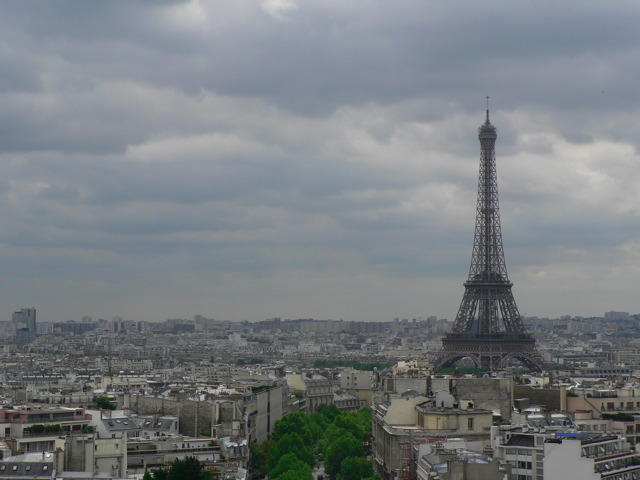
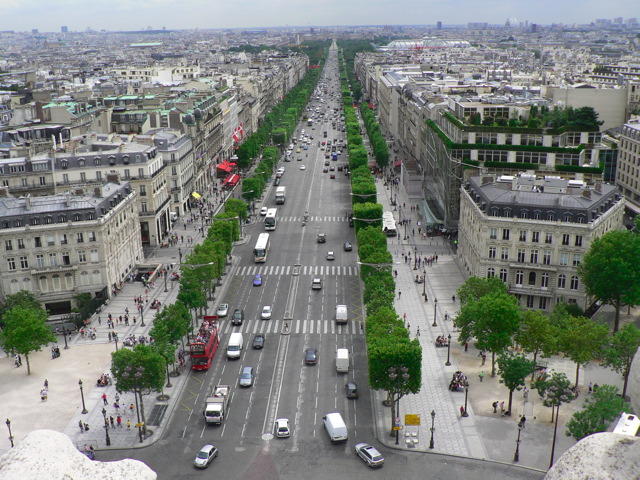
When I was last in Paris, I went to most all of the must-see sights, except for one: the Arc de Triumph. So, I decided with the day I had in Paris, I would spend it wandering the Champs Elysses, and seeing just how triumphant their arc really is. Right around the Arc is a wonder in and of itself: a 5-lane traffic turnabout with no stoplights. There are only two cops who control the traffic, and somehow, between the tourist busses, small mopeds and Renaults, keep traffic moving – incredible. To access the arc itself, you must walk under the turnabout via an underground tunnel. I reached the arc and decided to pay my 5 Euro to climb to the top. The climb itself is not for the claustrophobic, those scared of heights, those scared of crowds, those scared of heat or humidity, or those scared of being in close proximity to awkwardly dressed tourists. But after a couple hundred steps I finally made it out of the stairwell…and right into the gift shop. I decide to pass on an official Arc de Triumph placemat, and make my way out on top for the view. I have to say, as impressive as the view from the Eiffel Tower is, the view from the Arc is hands-down the best in Paris. From the Tur, you are so high up that the monstrosity that is Paris almost seems like a little pretend city. From the Arc, however, not only are you centrally located, you have magnificent sight lines, looking out towards the Champs Elysses, admiring how it seems to stretch on infinitely (and imagining Lance riding through with his yellow jersey on), and you get the Parisian skyline with the Eiffel. Only from a height like the Arc can you see just how impressive the Eiffel Tower, and the entire city of Paris really is.
--------------
I hope you’ll forgive me for all of the food-talk lately, but seeing as how I am in two of the food capitals of the world – Belgium and France – the culinary sides deserve their due respect here. I love the little Cafes of France, where the menus revolve around Baguettes, salads and coffees. The baguettes – sandwiches – are especially notable for how much taste they get out of such simple ingredients. For 4 Euro, I had a footlong (or should I say 1/3 meterlong) Baguette with chicken, tomato, mozzarella, and aioli. None of the ingredients by themselves were that special – besides of course the amazing bread – but the combination was fantastic. Also, most of you know what a big international Fanta fan I am. France prefers Orangina, and I have to say after 5 days here, I’m pretty hooked on the slightly pulpy wonder, myself. I have a feeling that when I’m home in September, we’ll add Orangina to the BevMo list. Back to the bread for a second; before leaving Le Havre, I walked into port and for 1 Euro, purchased my very own long baguette to bring back to the ship. I proudly carried my carb-loaded trophy like a baton on my walk back; I’m sure quite a few Le Havrans were impressed by this American’s taste in bread
---------------
I spent my final day in France visiting the beaches of Normandy where D-day occurred some 60 years ago. It was quite a sight to see the landscape near the beaches forever changed with gigantic ditches and holes, all the result of bombs. I also visited the American cemetery where about 10,000 Americans are buried. I’ve been to Arlington National, but I found this cemetery to be the most moving, if for no other reasons than the suddenness of the deaths, and the respectful burial site established thousands of miles away from home.
-------------
Unfortunately the internet is way too slow to upload pictures right now. Come back soon for some photos of France.
I walk in the boutique, where a pleasant old lady is minding the postage stamp sized store. We exchange our bonjour’s, and then I get to business. “Parlez-vous l’anglais?” I ask her, probably sounding more Texan than French. She shakes her head no. This should be interesting, I think to myself. Using a combination of mmm’s, ahh’s, and this’s and that’s, I direct her to the hat that I’m interested in. At this point, though, I have to explain to her that I want the biggest possible hat she has, not one for me. I, myself, don’t have a huge head, so she immediately picks out a hat that fits my noggin. I tell her no, and put out my hands as wide as I can, and tell her “like this!” She begins rummaging through the inventory, all the while speaking French, I suppose in the hopes that I either suddenly pick up the romance language, or that she stumbles upon a cognate I might recognize. She comes back with the same style hat just a bit larger. I try it on my own head for size, only to find it still fits me fairly well. “Bigger,” I tell her again, while making an even more exaggerated hand movement. She keeps on speaking French, milling around the back of the store and comes back with two more sizes of the hat, both just slightly larger than the one I tried on. I try them both on, seeing that they are slightly too big for me, but not nearly big enough for my Dad’s head. I give her one more “Like this” – arms wide – but she shakes her head no. I finally shrug my shoulders, give her a heartfelt “Merci,” and walk out the door. I can only imagine what she was thinking. I bet she never had someone walk in the store, try on 1 hat that fit them, 2 more that were too big, and walk out unsatisfied that the size that was too big, wasn’t “too big” enough. Stupid American.
----------------
I spent most of my time in France around Le Havre, but figured that since we were only 2.5 hours away from Paris, I had to spend at least one day there. I was in Paris this past New Year’s, where I found the city to contain perhaps the largest gap between the attractiveness of the city, and the haughtiness of the residents. This time around, I have to say I was much more impressed with the people – I found them to be quite welcoming, and incredibly appreciative when I would attempt the few French words I knew (although, of course, I never let on that I, in fact, know all of the words to Frere jaque).
When I was last in Paris, I went to most all of the must-see sights, except for one: the Arc de Triumph. So, I decided with the day I had in Paris, I would spend it wandering the Champs Elysses, and seeing just how triumphant their arc really is. Right around the Arc is a wonder in and of itself: a 5-lane traffic turnabout with no stoplights. There are only two cops who control the traffic, and somehow, between the tourist busses, small mopeds and Renaults, keep traffic moving – incredible. To access the arc itself, you must walk under the turnabout via an underground tunnel. I reached the arc and decided to pay my 5 Euro to climb to the top. The climb itself is not for the claustrophobic, those scared of heights, those scared of crowds, those scared of heat or humidity, or those scared of being in close proximity to awkwardly dressed tourists. But after a couple hundred steps I finally made it out of the stairwell…and right into the gift shop. I decide to pass on an official Arc de Triumph placemat, and make my way out on top for the view. I have to say, as impressive as the view from the Eiffel Tower is, the view from the Arc is hands-down the best in Paris. From the Tur, you are so high up that the monstrosity that is Paris almost seems like a little pretend city. From the Arc, however, not only are you centrally located, you have magnificent sight lines, looking out towards the Champs Elysses, admiring how it seems to stretch on infinitely (and imagining Lance riding through with his yellow jersey on), and you get the Parisian skyline with the Eiffel. Only from a height like the Arc can you see just how impressive the Eiffel Tower, and the entire city of Paris really is.
--------------
I hope you’ll forgive me for all of the food-talk lately, but seeing as how I am in two of the food capitals of the world – Belgium and France – the culinary sides deserve their due respect here. I love the little Cafes of France, where the menus revolve around Baguettes, salads and coffees. The baguettes – sandwiches – are especially notable for how much taste they get out of such simple ingredients. For 4 Euro, I had a footlong (or should I say 1/3 meterlong) Baguette with chicken, tomato, mozzarella, and aioli. None of the ingredients by themselves were that special – besides of course the amazing bread – but the combination was fantastic. Also, most of you know what a big international Fanta fan I am. France prefers Orangina, and I have to say after 5 days here, I’m pretty hooked on the slightly pulpy wonder, myself. I have a feeling that when I’m home in September, we’ll add Orangina to the BevMo list. Back to the bread for a second; before leaving Le Havre, I walked into port and for 1 Euro, purchased my very own long baguette to bring back to the ship. I proudly carried my carb-loaded trophy like a baton on my walk back; I’m sure quite a few Le Havrans were impressed by this American’s taste in bread
---------------
I spent my final day in France visiting the beaches of Normandy where D-day occurred some 60 years ago. It was quite a sight to see the landscape near the beaches forever changed with gigantic ditches and holes, all the result of bombs. I also visited the American cemetery where about 10,000 Americans are buried. I’ve been to Arlington National, but I found this cemetery to be the most moving, if for no other reasons than the suddenness of the deaths, and the respectful burial site established thousands of miles away from home.
-------------
Unfortunately the internet is way too slow to upload pictures right now. Come back soon for some photos of France.
Sunday, July 24, 2005
Bye Bye London
Two blog posts today, including a report on Belgium, but first an update on our voyage. Due to the recent bombings in London, Semester at Sea has decided to switch our next port of call away from the UK, choosing instead Le Havre, France. Le Havre is located in Northern France, and is about 2.5 hours away from Paris by train.
I try to stay away from editorializing too much in this blog, choosing instead to share my experiences with you all, but I think it’s important to state my disappointment with this decision. While the terrorist attacks are both tragic and scary, there are still plenty of people living in the city going about their lives as usual – or at least a very close approximation to it. While there has been a dropoff in the number of citizens using the Tube for transportation, the trains are far from empty. This suggests that Londoners are willing to go about their lives without letting terrorism rule every decision. Even after these terrorist attacks, I don’t feel any less safe going to London than I do any big city, especially Washington DC, perhaps the world’s top terrorist target, where I just spent 10 weeks. This isn’t a reckless, carefree attitude, but rather a rational analysis of the impact of terrorism, and my insistence that suicide bombers won’t stop me from exploring and experiencing important places in the world. Unfortunately, I believe that the decision to divert our voyage away from London was done so out of fear of public opinion rather than rational fear of bodily harm. This voyage is supposed to show us the world, and, regrettably, terrorism has become part of our everyday lives. This, however, does not mean that we should shy away from any situation in which there is danger. Further, at times like this, it’s important to support affected areas, and what better way to show our support than to visit as scheduled. What happens if more groups of otherwise eager travelers are turned away from visiting London because of a couple of attacks? Should that be enough to turn a public-transportation system into a ghost train, or to transform one of the world’s most storied cities into no-man’s land? Even in the midst of these attacks, I still believe that London is safer than Moscow, a city we all visited and came out not only unscathed, but better for the experience.
This news of course, will not stop me from enjoying our next port – as much as I wanted to see London and possibly make a trip out to the links of St. Andrews. However, with not much time to plan, I’d like to know if any of you have traveled to northern France before, and if so, what tips you might have for places to see. I may go to Paris, but I was just there in December, and would like to see other parts, so all suggestions are welcome.
Now on to better things: Belgium.
First of all, thank you to all of you who wanted to make sure I did, in fact, eat a waffle in Belgium. Rest assured I had two for myself, as well as tastes of my friend’s waffles, and enjoyed them all. Waffles in Belgium, it should be noted, are not quite like their American cousins. Waffles in Antwerp more closely resemble fried cake. Also, you can forget asking for “a little syrup” on your waffles. Here, you choose a couple of toppings which range from whipped cream and cherries (my personal favorite), to a chocolate coating, to Icecream, whipped cream, sprinkles and chocolate sauce as one of the girls I was with had. Amazingly, it seems despite how many things you can think of throwing on top of a waffle, the price it seems never tops 3 Euros.
I spent most of my time in Antwerp walking around the city, going in shops and stores and taking photos as I pleased. This was a pleasant break from all of the group travel I had done in Russia and Poland where our organized trips were filled with “hurry up and wait.” On those trips you don’t get a chance to see things you want to see for as long as you want to see them, and are always beholden to a tour guide, who, in Moscow was a fierce little lady. My time in Antwerp reminded me of the amazing time I had this past winter in Europe with Justin and Mark, where we spent most of our time, at our own leisure, exploring the cities at ground level.
In the short time I was there, we managed to find a bar that became our main hangout; it was, in many respects the best of globalization: an Irish pub atmosphere, Belgian beer, and American music. The beer in Belgium is very simple to order. There are hundreds of local breweries, but each one puts out just two types of beer: blonde (light), or bruin (dark). I took special enjoyment in purposely mispronouncing my order, asking for a “Bruin,” instead of a “Brooooon.” When I get back to Westwood, I’m going to go talk to Maloney’s and tell them to only stock Belgian Bruin beer; I don’t think they’ll listen to me.
I wrote about my obsession with Norway’s obsession with Americana on their t-shirts; Belgium’s fashion was almost as entertaining. My favorite items were a series of shirts that apparently assume that California and Florida are the same state, as they offered Abercrombie style shirts that said “Santa Monica Boulevard Lifegard, Miami Beach Florida,” and “Santa Monica, Florida Surf contest.” Apparently Belgians have decided that just because two American regions are sunny and have beaches, they must be the same, even if they lie 3000 miles from each other. If nothing else, I’m glad Belgians are envious of Santa Monica, and not Rhode Island, as the Norwegians are.
I leave you with some photos of my time in Belgium, and, a semi-promise to finish writing and post more experiences from Russia and Poland.
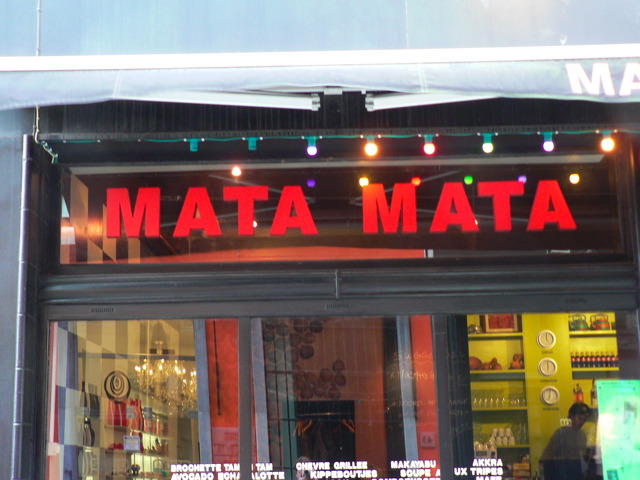
Apparently Lorenzo Mata has given up on basketball and opened up a restaurant in Antwerp:

A couple of photos from the afternoon I spent in Ghent – about an hour from Antwerp:


The Antwerp Cathedral at night:

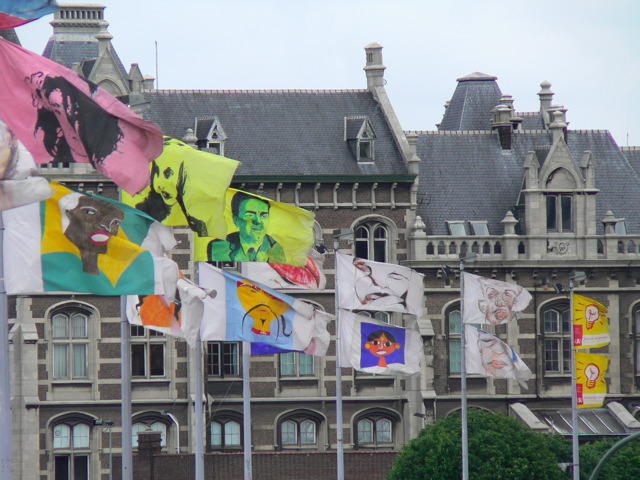
Yeah, I am obsessed with the flags:

I try to stay away from editorializing too much in this blog, choosing instead to share my experiences with you all, but I think it’s important to state my disappointment with this decision. While the terrorist attacks are both tragic and scary, there are still plenty of people living in the city going about their lives as usual – or at least a very close approximation to it. While there has been a dropoff in the number of citizens using the Tube for transportation, the trains are far from empty. This suggests that Londoners are willing to go about their lives without letting terrorism rule every decision. Even after these terrorist attacks, I don’t feel any less safe going to London than I do any big city, especially Washington DC, perhaps the world’s top terrorist target, where I just spent 10 weeks. This isn’t a reckless, carefree attitude, but rather a rational analysis of the impact of terrorism, and my insistence that suicide bombers won’t stop me from exploring and experiencing important places in the world. Unfortunately, I believe that the decision to divert our voyage away from London was done so out of fear of public opinion rather than rational fear of bodily harm. This voyage is supposed to show us the world, and, regrettably, terrorism has become part of our everyday lives. This, however, does not mean that we should shy away from any situation in which there is danger. Further, at times like this, it’s important to support affected areas, and what better way to show our support than to visit as scheduled. What happens if more groups of otherwise eager travelers are turned away from visiting London because of a couple of attacks? Should that be enough to turn a public-transportation system into a ghost train, or to transform one of the world’s most storied cities into no-man’s land? Even in the midst of these attacks, I still believe that London is safer than Moscow, a city we all visited and came out not only unscathed, but better for the experience.
This news of course, will not stop me from enjoying our next port – as much as I wanted to see London and possibly make a trip out to the links of St. Andrews. However, with not much time to plan, I’d like to know if any of you have traveled to northern France before, and if so, what tips you might have for places to see. I may go to Paris, but I was just there in December, and would like to see other parts, so all suggestions are welcome.
Now on to better things: Belgium.
First of all, thank you to all of you who wanted to make sure I did, in fact, eat a waffle in Belgium. Rest assured I had two for myself, as well as tastes of my friend’s waffles, and enjoyed them all. Waffles in Belgium, it should be noted, are not quite like their American cousins. Waffles in Antwerp more closely resemble fried cake. Also, you can forget asking for “a little syrup” on your waffles. Here, you choose a couple of toppings which range from whipped cream and cherries (my personal favorite), to a chocolate coating, to Icecream, whipped cream, sprinkles and chocolate sauce as one of the girls I was with had. Amazingly, it seems despite how many things you can think of throwing on top of a waffle, the price it seems never tops 3 Euros.
I spent most of my time in Antwerp walking around the city, going in shops and stores and taking photos as I pleased. This was a pleasant break from all of the group travel I had done in Russia and Poland where our organized trips were filled with “hurry up and wait.” On those trips you don’t get a chance to see things you want to see for as long as you want to see them, and are always beholden to a tour guide, who, in Moscow was a fierce little lady. My time in Antwerp reminded me of the amazing time I had this past winter in Europe with Justin and Mark, where we spent most of our time, at our own leisure, exploring the cities at ground level.
In the short time I was there, we managed to find a bar that became our main hangout; it was, in many respects the best of globalization: an Irish pub atmosphere, Belgian beer, and American music. The beer in Belgium is very simple to order. There are hundreds of local breweries, but each one puts out just two types of beer: blonde (light), or bruin (dark). I took special enjoyment in purposely mispronouncing my order, asking for a “Bruin,” instead of a “Brooooon.” When I get back to Westwood, I’m going to go talk to Maloney’s and tell them to only stock Belgian Bruin beer; I don’t think they’ll listen to me.
I wrote about my obsession with Norway’s obsession with Americana on their t-shirts; Belgium’s fashion was almost as entertaining. My favorite items were a series of shirts that apparently assume that California and Florida are the same state, as they offered Abercrombie style shirts that said “Santa Monica Boulevard Lifegard, Miami Beach Florida,” and “Santa Monica, Florida Surf contest.” Apparently Belgians have decided that just because two American regions are sunny and have beaches, they must be the same, even if they lie 3000 miles from each other. If nothing else, I’m glad Belgians are envious of Santa Monica, and not Rhode Island, as the Norwegians are.
I leave you with some photos of my time in Belgium, and, a semi-promise to finish writing and post more experiences from Russia and Poland.
Apparently Lorenzo Mata has given up on basketball and opened up a restaurant in Antwerp:
A couple of photos from the afternoon I spent in Ghent – about an hour from Antwerp:


The Antwerp Cathedral at night:

Yeah, I am obsessed with the flags:
Wednesday, July 20, 2005
A Taste of Belgium
If you were to start a city and choose a couple of foods upon which your local cuisine would center, I have a feeling you would probably end up selecting ones very similar to Belgium’s specialties. It’s hard to argue with the delicacies here: Belgian waffles, Belgian fries, Belgian chocolate, and Belgian beer.
Our first night in Antwerp started off with dinner at a cozy little café, where I had the classic Belgian specialty: the “One Night in Bangkok Chicken Sandwich.” With the sandwich I asked what kind of beer our waitress recommended; she told me the most popular is a beer called Jupiler, so I gave that a try. It’s an excellent beer, especially since I like lighter flavors, and the price was right – less than 1.90Euros, while a Fanta would have set me back 2.50 Euros.
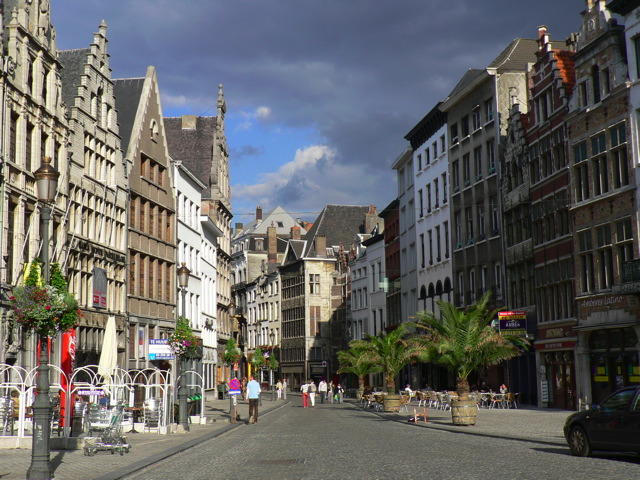
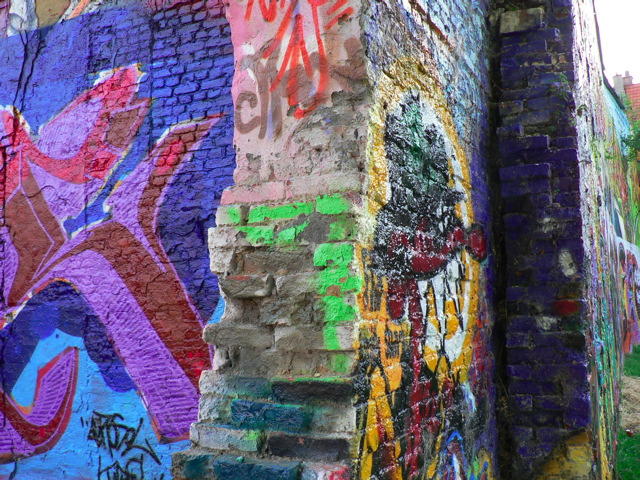
A bit full from dinner, we wandered the streets of Antwerp with two goals in mind: explore the city, and make room for the Belgium fries. The city itself has a lot of character. Lots of old buildings, still in remarkable condition, line the narrow, curving streets. Much of the ground is still made of cobblestones, and a lot of the city is closed to cars, so pedestrians can walk around freely. There are also pockets of very interesting sections, including one small park, in the middle of the city, surrounded by walls covered in gorgeous, colorful graffiti. Along the waterfront where our ship is docked, are a series of fascinating flags hanging from light posts; each light post features two flags, each one with a caricature of a face. The faces range from whimsical cartoons to serious sketches, providing some atmosphere to an otherwise blasé waterfront.
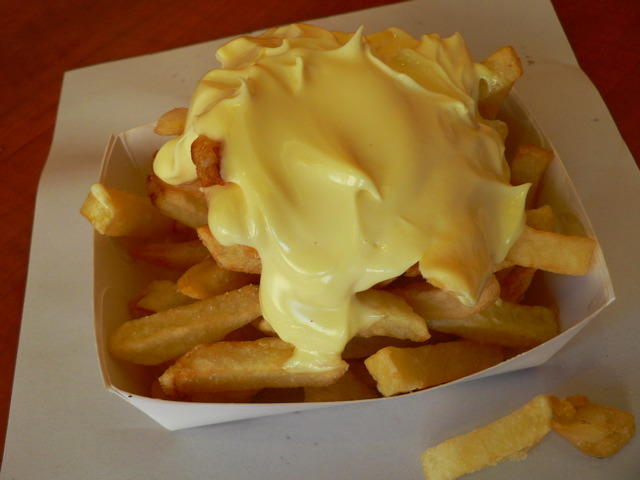
After some exploring, we felt it was time to try the fries. There are numerous “Frituur’s” around the city, almost all with just a small storefront, and a very limited menu. We ordered the klein frites especial – small fries with mayonnaise. The fries come extremely hot, in a flimsy paper tray, with a huge dallop of mayonnaise on top (Uncle Mark: don’t even think about the especial; I have a feeling just seeing the photo of the mayo will make you sick). The fries her
Our first night in Antwerp started off with dinner at a cozy little café, where I had the classic Belgian specialty: the “One Night in Bangkok Chicken Sandwich.” With the sandwich I asked what kind of beer our waitress recommended; she told me the most popular is a beer called Jupiler, so I gave that a try. It’s an excellent beer, especially since I like lighter flavors, and the price was right – less than 1.90Euros, while a Fanta would have set me back 2.50 Euros.
A bit full from dinner, we wandered the streets of Antwerp with two goals in mind: explore the city, and make room for the Belgium fries. The city itself has a lot of character. Lots of old buildings, still in remarkable condition, line the narrow, curving streets. Much of the ground is still made of cobblestones, and a lot of the city is closed to cars, so pedestrians can walk around freely. There are also pockets of very interesting sections, including one small park, in the middle of the city, surrounded by walls covered in gorgeous, colorful graffiti. Along the waterfront where our ship is docked, are a series of fascinating flags hanging from light posts; each light post features two flags, each one with a caricature of a face. The faces range from whimsical cartoons to serious sketches, providing some atmosphere to an otherwise blasé waterfront.
After some exploring, we felt it was time to try the fries. There are numerous “Frituur’s” around the city, almost all with just a small storefront, and a very limited menu. We ordered the klein frites especial – small fries with mayonnaise. The fries come extremely hot, in a flimsy paper tray, with a huge dallop of mayonnaise on top (Uncle Mark: don’t even think about the especial; I have a feeling just seeing the photo of the mayo will make you sick). The fries her
A Taste of Belgium
If you were to start a city and choose a couple of foods upon which your local cuisine would center, I have a feeling you would probably end up selecting ones very similar to Belgium’s specialties. It’s hard to argue with the delicacies here: Belgian waffles, Belgian fries, Belgian chocolate, and Belgian beer.
Our first night in Antwerp started off with dinner at a cozy little café, where I had the classic Belgian specialty: the “One Night in Bangkok Chicken Sandwich.” With the sandwich I asked what kind of beer our waitress recommended; she told me the most popular is a beer called Jupiler, so I gave that a try. It’s an excellent beer, especially since I like lighter flavors, and the price was right – less than 1.90Euros, while a Fanta would have set me back 2.50 Euros.
A bit full from dinner, we wandered the streets of Antwerp with two goals in mind: explore the city, and make room for the Belgium fries. The city itself has a lot of character. Lots of old buildings, still in remarkable condition, line the narrow, curving streets. Much of the ground is still made of cobblestones, and a lot of the city is closed to cars, so pedestrians can walk around freely. There are also pockets of very interesting sections, including one small park, in the middle of the city, surrounded by walls covered in gorgeous, colorful graffiti. Along the waterfront where our ship is docked, are a series of fascinating flags hanging from light posts; each light post features two flags, each one with a caricature of a face. The faces range from whimsical cartoons to serious sketches, providing some atmosphere to an otherwise blasé waterfront.
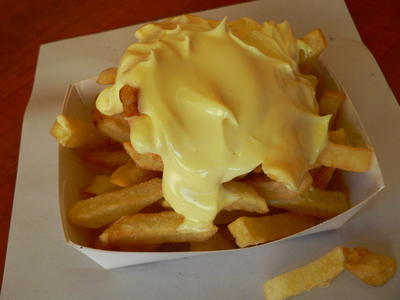
After some exploring, we felt it was time to try the fries. There are numerous “Frituur’s” around the city, almost all with just a small storefront, and a very limited menu. We ordered the klein frites especial – small fries with mayonnaise. The fries come extremely hot, in a flimsy paper tray, with a huge dallop of mayonnaise on top (Uncle Mark: don’t even think about the especial; I have a feeling just seeing the photo of the mayo will make you sick). The fries here are baked before being fried, so they are very crispy on the outside, and despite the excessive grease, really don’t feel that heavy while you eat them. I don’t know exactly what it is about the fries – perhaps it’s the combination of fried potatoes with globs of mayo – but as soon as you eat a few of them, you can feel it. We split a small portion, and didn’t even get to the bottom of the tray. How someone could finish a small, let alone a large portion, by themselves is beyond me. It is, however, my recommendation that Belgian frites be added to the traditional Yom Kippur dinner, because I think a tray of these things would definitely stick with you for at least 24 hours of atonement – they may even hold you over for a double-duty of davening.
Alas, after eating part of a small fries, in addition to my meal and Belgian beer, there was no way I could go for the “trifecta,” finishing off the night with a waffle. Fear not, however, as the waffle is high on my to-do list tomorrow in exploring the city.
I leave you with some photos of the evening:
Street scene:

Graffiti:


Flags:

Fries:
Our first night in Antwerp started off with dinner at a cozy little café, where I had the classic Belgian specialty: the “One Night in Bangkok Chicken Sandwich.” With the sandwich I asked what kind of beer our waitress recommended; she told me the most popular is a beer called Jupiler, so I gave that a try. It’s an excellent beer, especially since I like lighter flavors, and the price was right – less than 1.90Euros, while a Fanta would have set me back 2.50 Euros.
A bit full from dinner, we wandered the streets of Antwerp with two goals in mind: explore the city, and make room for the Belgium fries. The city itself has a lot of character. Lots of old buildings, still in remarkable condition, line the narrow, curving streets. Much of the ground is still made of cobblestones, and a lot of the city is closed to cars, so pedestrians can walk around freely. There are also pockets of very interesting sections, including one small park, in the middle of the city, surrounded by walls covered in gorgeous, colorful graffiti. Along the waterfront where our ship is docked, are a series of fascinating flags hanging from light posts; each light post features two flags, each one with a caricature of a face. The faces range from whimsical cartoons to serious sketches, providing some atmosphere to an otherwise blasé waterfront.
After some exploring, we felt it was time to try the fries. There are numerous “Frituur’s” around the city, almost all with just a small storefront, and a very limited menu. We ordered the klein frites especial – small fries with mayonnaise. The fries come extremely hot, in a flimsy paper tray, with a huge dallop of mayonnaise on top (Uncle Mark: don’t even think about the especial; I have a feeling just seeing the photo of the mayo will make you sick). The fries here are baked before being fried, so they are very crispy on the outside, and despite the excessive grease, really don’t feel that heavy while you eat them. I don’t know exactly what it is about the fries – perhaps it’s the combination of fried potatoes with globs of mayo – but as soon as you eat a few of them, you can feel it. We split a small portion, and didn’t even get to the bottom of the tray. How someone could finish a small, let alone a large portion, by themselves is beyond me. It is, however, my recommendation that Belgian frites be added to the traditional Yom Kippur dinner, because I think a tray of these things would definitely stick with you for at least 24 hours of atonement – they may even hold you over for a double-duty of davening.
Alas, after eating part of a small fries, in addition to my meal and Belgian beer, there was no way I could go for the “trifecta,” finishing off the night with a waffle. Fear not, however, as the waffle is high on my to-do list tomorrow in exploring the city.
I leave you with some photos of the evening:
Street scene:
Graffiti:

Flags:

Fries: